Inside a Week-Long Glass Artist Residency at Adams Central Elementary

Community Project, kids classes, Uncategorized

In September 2025, the Hastings Tribune covered a week-long artist residency I led at Adams Central Elementary in Hastings, Nebraska — and it’s a great example of what an in-school glass art residency can look like from start to finish, so I wanted to give it a fuller recap here.

The Inspiration: Patty Talbert’s North Omaha Positive Affirmation Project

Every residency I bring into a school starts with an artist and an idea worth borrowing. For this one, we looked at the work of Omaha artist Patty Talbert, whose North Omaha Positive Affirmation Project uses public art to put messages of self-worth directly into the community.

Students spent time with Talbert’s approach — art as affirmation, not just decoration — before writing their own. Those affirmations became the design language for everything that followed.
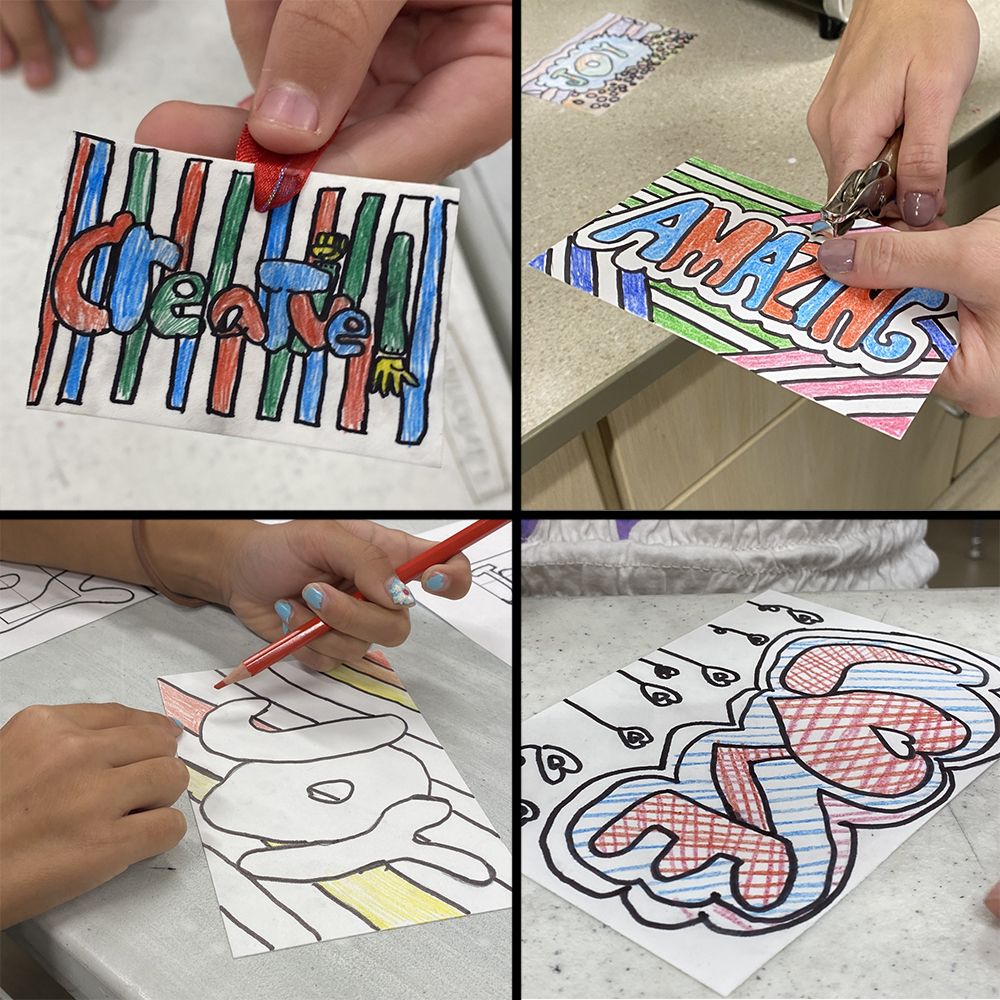
Students created Shrinky Dink affirmations in the style of Patty Talbert, artist-in-residence program funded by Nebraska Arts Council

What the Students Made

The residency worked on two tracks, which is typical of how I structure a school visit:

  • A take-home project for every student. Each student used their affirmation to design a piece in Shrinky Dinks — a fast, accessible material that lets even the youngest students walk away with something finished and personal on day one.
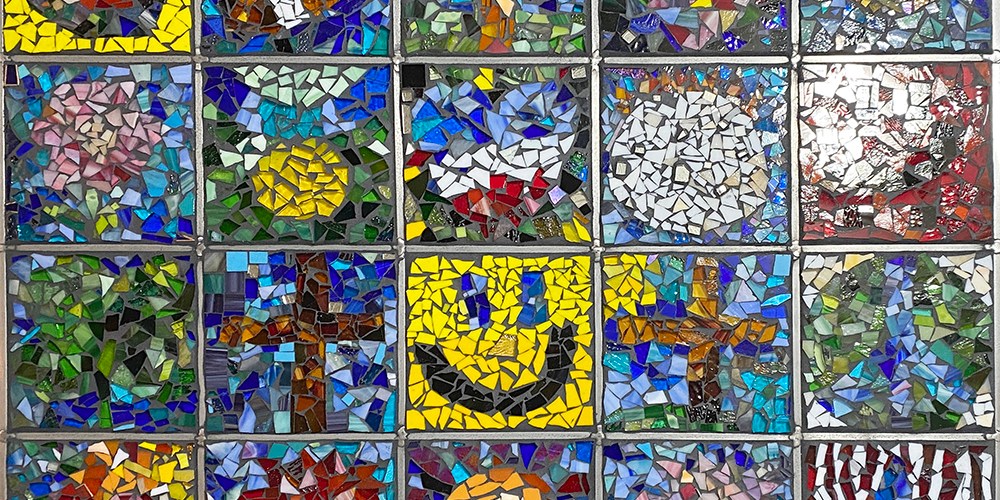
  • A large-scale, permanent installation. The fifth-grade class took the concept further, designing and building a glass-on-glass mosaic “legacy window.” It now hangs permanently in the school — this was actually Adams Central’s second legacy window; an earlier class built one a few years prior that still hangs in the cafeteria.That two-track structure is intentional: individual work that goes home with a family, and a collective piece that stays behind as a lasting mark on the school itself.
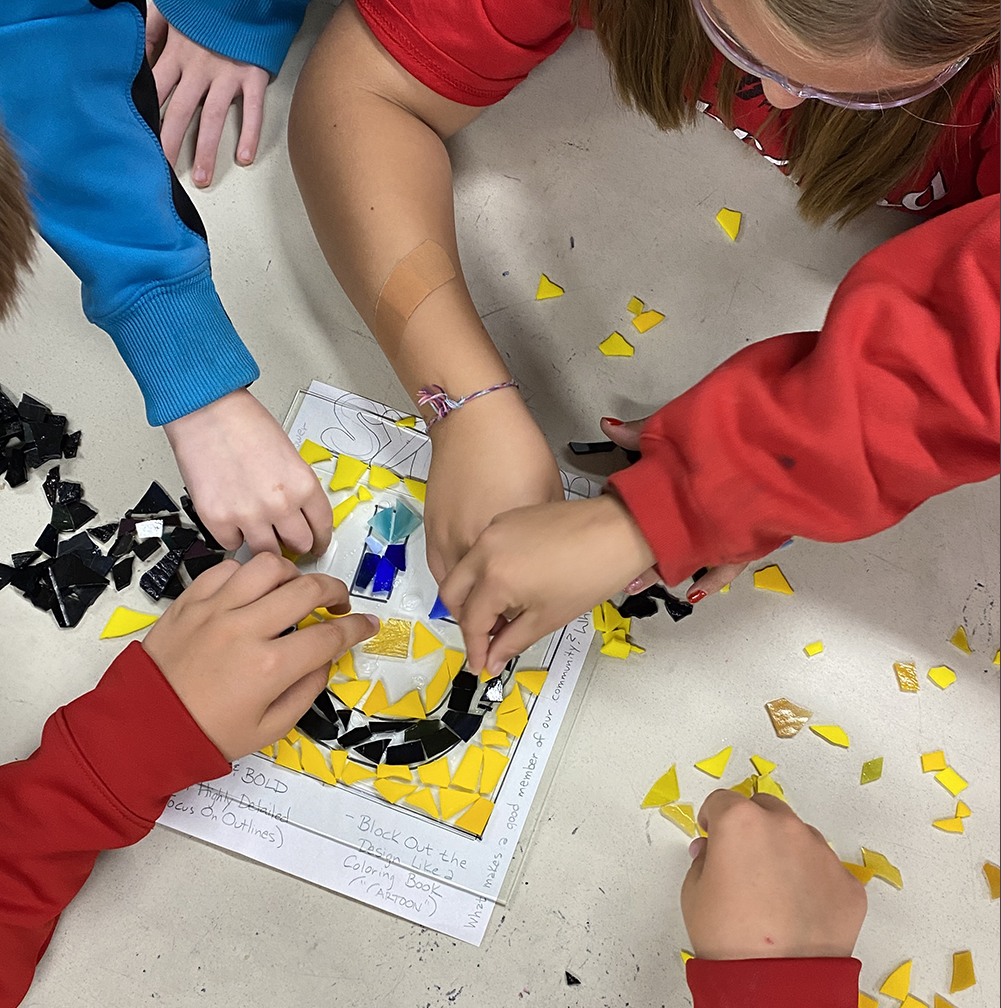
Students adding glass to a collaborative window
Students creating glass art through artist residencies for elementary schools in Nebraska.

Why Schools Book Artist Residencies Like This

A residency like this does a few things a single art class period can’t:

  • Gives students a finished, professional-grade artwork in a medium (glass) they don’t normally get to touch
  • Creates a permanent installation that becomes part of the school’s identity — something alumni, staff, and families point to for years
  • Connects classroom learning to a working artist’s real practice and a real community art project, not just a generic craft
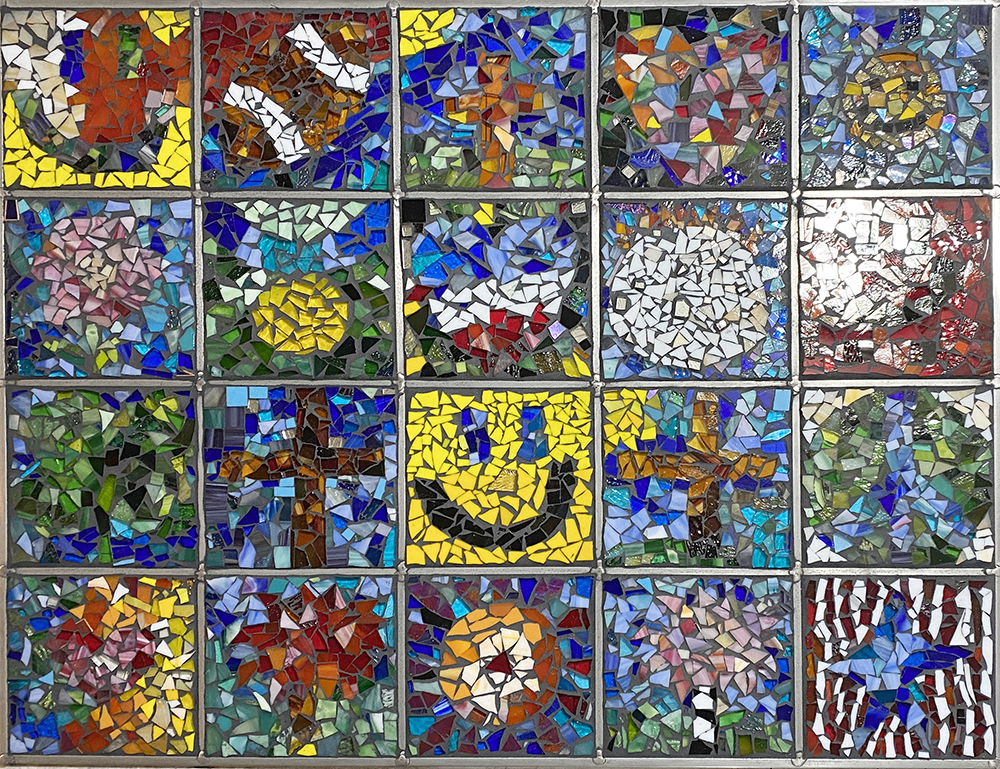
Students worked in groups to design a glass mosaic legacy window for permanent installation in their school
.

Funding: Nebraska Arts Council Artists in Schools & Communities Program

If you’re a Nebraska teacher, PTO member, or administrator picturing something like this in your own school: residencies like this one are eligible for funding through the Nebraska Arts Council’s Artists in Schools & Communities (AISC) program. I’m on the NAC roster and can help walk your school through what that process looks like.

Interested in a residency at your school? Get in touch — I’d love to talk through what’s possible for your students.

Carrie Strope is a Lincoln, Nebraska-based glass and teaching artist working under the name Calyx Glass, and a Nebraska Arts Council Artists in Schools & Communities roster artist.
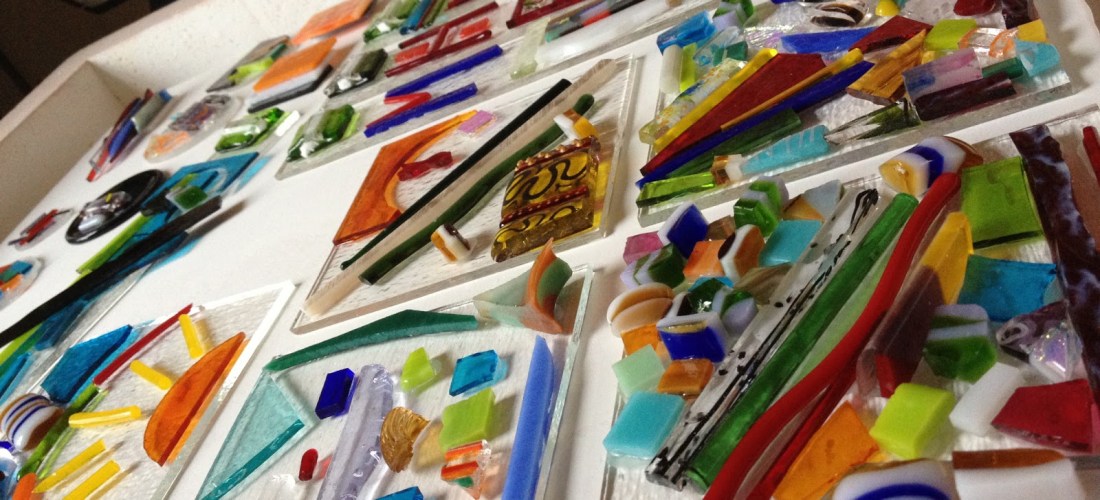
Fused Glass Fun with Girl Scout Troops

girl scouts, kids classes, private class
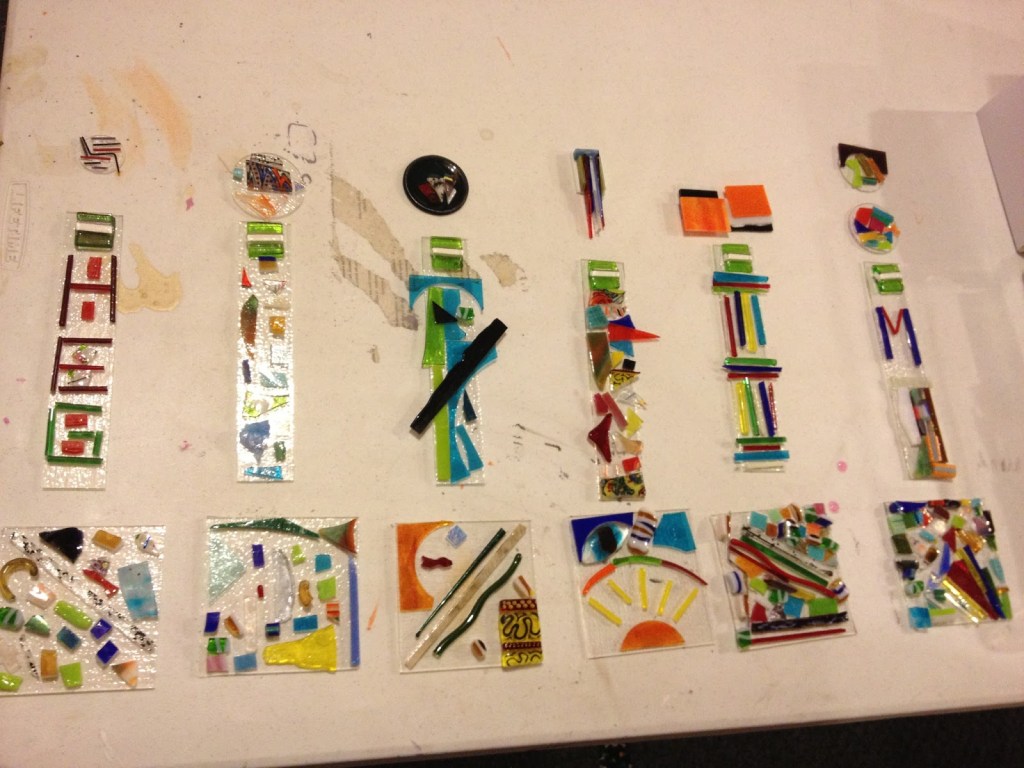
The girls creations at the end of our 2 hour session.

As a Girl Scout Community Collaborator, I work with Girl Scout troops to create glass art. Sometimes we meet for mosaics, but this post is all about glass fusing! Earlier this year, I worked with a Girl Scout troop from Council Bluffs, Iowa. There were 6 girls able to attend the meeting. We talked about how glass is made, how to “play” with glass safely, and how to create art with glass.

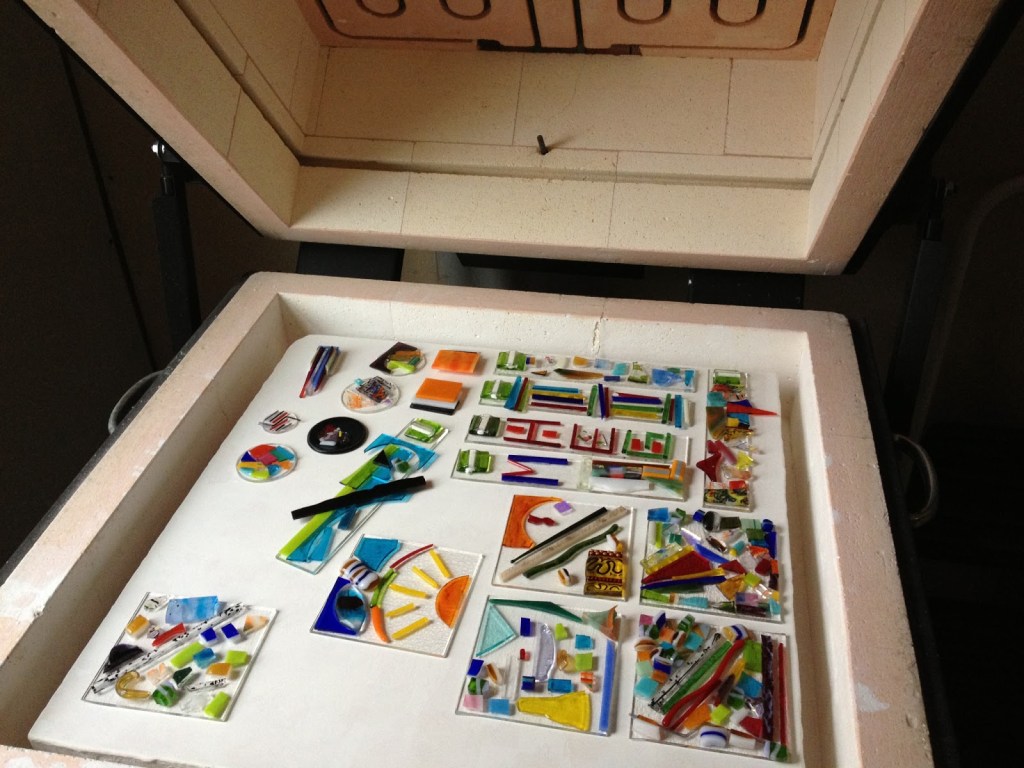
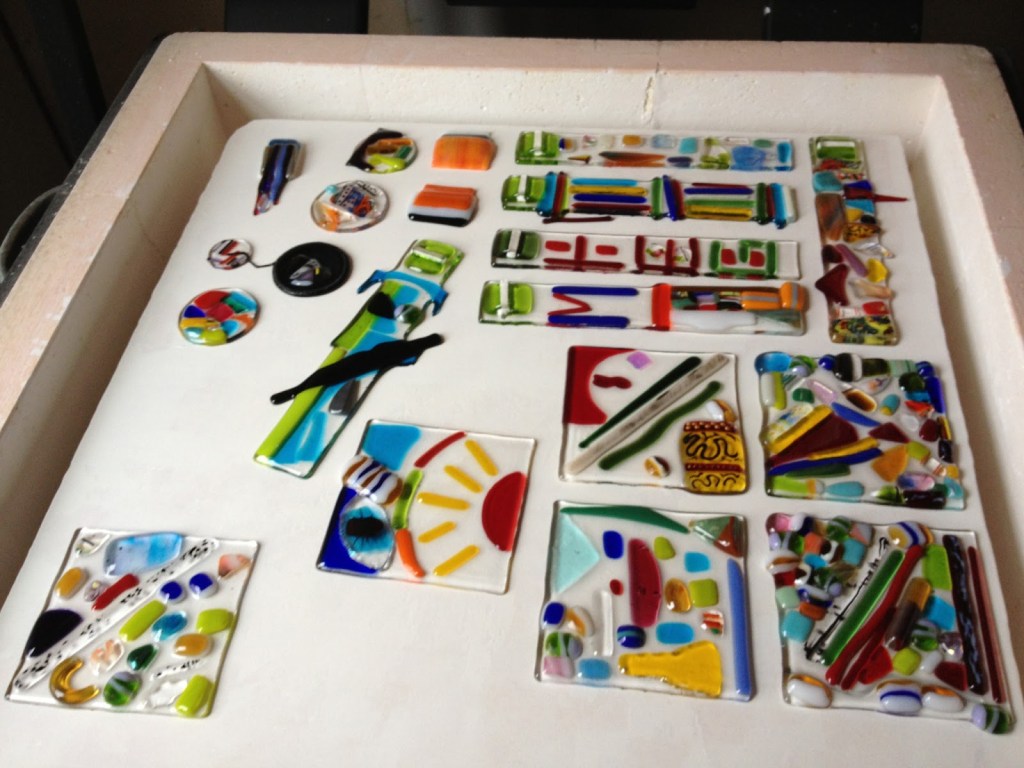
A kiln full of glass before firing.

I give each girl two sheets of clear glass; one for a plate and one for a sun catcher. After digging through my scraps and piecing together their larger pieces, they can make pendants (or magnets) for the rest of the session. Generally, each girl will finish all three projects. Some may end up with more pendants, and some spend a lot of time piecing together the perfect plate (and need help from mom or friends to finish other projects). 

Same kiln – after firing.

After our session, the girls go home and I get to work! After cleaning up the work area and letting the glue dry (so the pieces don’t shift on the way to the kiln), I prep the kiln for firing. I need to coat the kiln shelves with kiln wash to prevent the glass from sticking to the shelf permanently. Then, I need to let the kiln wash dry or else the glass pieces end up with kiln wash stuck to them! I generally speed this part up by running the kiln up to 500ºF for 30 minutes and then letting it cool back down to room temperature.

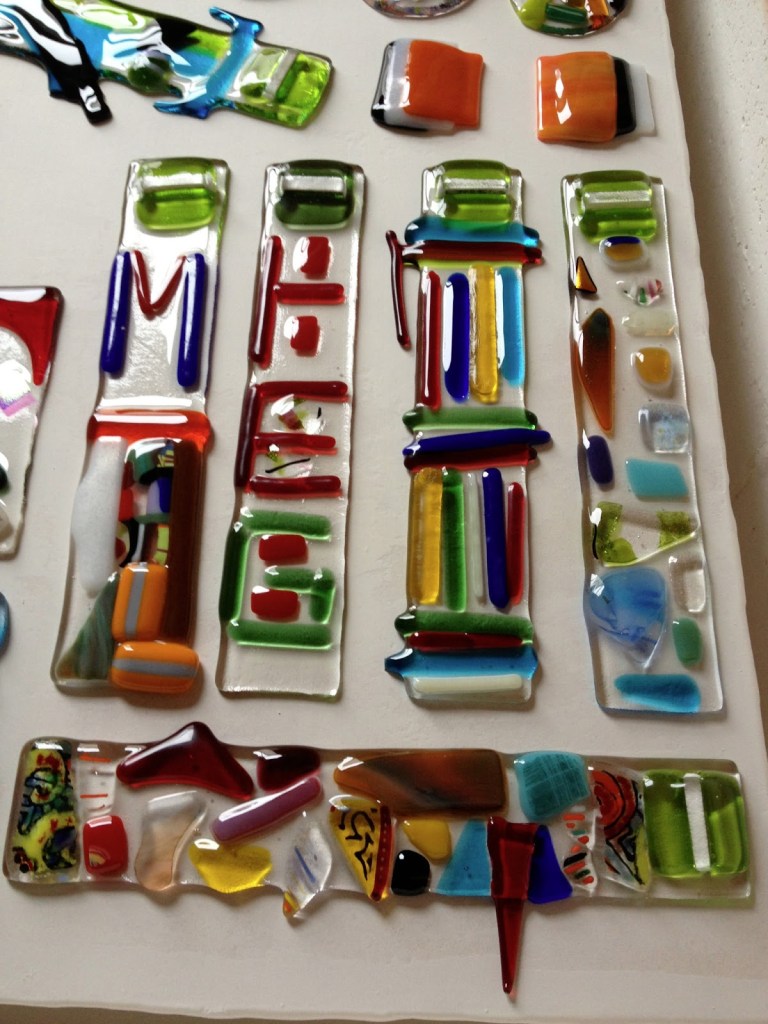
Close up of plates pre-fire

Now that the kiln is prepped, I can load all the pieces in it. If I’m lucky, I can fit everything in the kiln at once. However, since I seldom give strict rules when the girls are constructing, I’ll sometimes have one piece that needs to go in the kiln at a different temperature. This is a decision I make based on my years of experience firing glass taking into consideration how much glass has been used, whether or not it’s even across the entire sheet of glass and how I know the glass will act in the kiln.

Fused glass sun catchers after firing.

The glass comes out of the kiln in one piece, but it’s all flat. For the plates, I need to put the glass back in the kiln in molds to shape them and make them three dimensional. This is done in a separate firing because the temperature doesn’t need to get as hot as it did for fusing the glass together. (By the way, glass fusing temperatures are around 1480ºF, whereas slumping temperatures are only around 1250ºF.) 

When all of the glass is finished firing, I clean up the edges. Sometimes little bits of glass will end up grabbing the kiln shelf and creating needles. I grind those off so that the glass art doesn’t bite! Then, I wrap it up so it won’t break and label it with each girls name, and they’re ready to be picked up! Generally the whole process takes 5-7 days. If this is something you’d like to do with your Girl Scout troop, please contact me for a list of available dates. Current pricing is $25 a girl, which is a steal!